Top Hybrid Car Tax Breaks in Vietnam, Thailand and Indonesia
Which Country Gives the Best Hybrid Car Tax Breaks? Vietnam, Thailand & Indonesia Compared
Governments across Southeast Asia are in a race to lure eco‑friendly drivers with deep tax discounts on hybrid vehicles. But the fine print differs dramatically from one market to another. Want to know where the biggest savings hide and what you must do to qualify? Read on for the quick numbers, the eligibility hurdles, and the real impact on your wallet.
Key Highlights – Hybrid Vehicle Tax Comparison
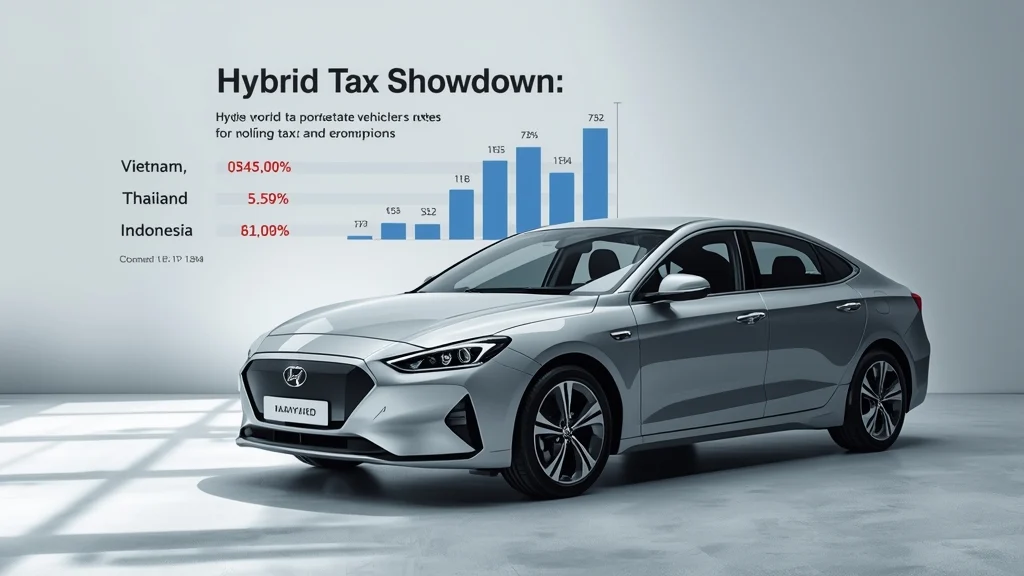
Vietnam – “70 % SCT” rule
Special consumption tax (SCT) for hybrids is capped at 70 % of the rate applied to comparable gasoline cars.
• Typical gasoline SCT: 35 %–150 % → Hybrid SCT: 24.5 %–105 %
• Qualification: hybrid must use ≤ 70 % of the fuel energy of an equivalent ICE model (the R‑ratio test).Thailand – Low‑excise sweet spot
Excise tax for hybrids runs 5 %‑10 %, roughly 30 %‑50 % of the gasoline rate.
• Mild‑hybrids: 10 % tax if CO₂ ≤ 100 g/km; 12 % if 101‑120 g/km.
• Full hybrids: 6 % tax if CO₂ ≤ 100 g/km; 9 % if 101‑120 g/km.
• Plug‑in hybrids: 5 % tax with ≥ 80 km electric‑only range, otherwise 10 %.
• Must meet 17 %‑45 % local parts content and a US$84 M localisation commitment (2024‑2027).Indonesia – Luxury‑tax cut for locals
Luxury Sales Tax (PPnBM) for gasoline cars is 10 %‑40 % (under 3 L); hybrids fall under 10 % of that benchmark.
• Applies only to domestically produced/assembled vehicles certified under the Low‑Carbon Emission Vehicle (LCEV) programme.
• Fuel‑consumption limits: ≤ 6.45 L/100 km (gasoline hybrids) or ≤ 5.71 L/100 km (diesel hybrids).
• Minimum 40 % local content required.
Why This Matters to You
- Price Shock: A lower excise or luxury tax can shave tens of thousands of dollars off the sticker price. Thailand and Indonesia currently offer the steepest cuts, but only if your hybrid meets strict CO₂ or electric‑range thresholds.
- Compliance Cost: Meeting local‑parts quotas or certification programmes may add hidden costs for manufacturers, which can ultimately affect pricing and availability.
- Future‑Proofing: All three governments signal they will tweak rates as the market matures. Knowing the baseline rules now helps you anticipate price shifts and plan your purchase or fleet strategy accordingly.
If you’re weighing a hybrid purchase in Southeast Asia, the decision isn’t just about fuel economy—it’s about navigating each nation’s tax maze to unlock the biggest green car incentives.
Ready for the full breakdown, with detailed tables and the 2026 tax outlook? Dive into the complete analysis here: Hybrid Car Tax Incentives in Vietnam, Thailand & Indonesia.
Start saving today and drive greener tomorrow. 🚗💨
Hashtag : #carwikihub #HybridCars #TaxIncentives #GreenMobility #SoutheastAsia #VehicleIncentives #EcoCars


Comments
Post a Comment